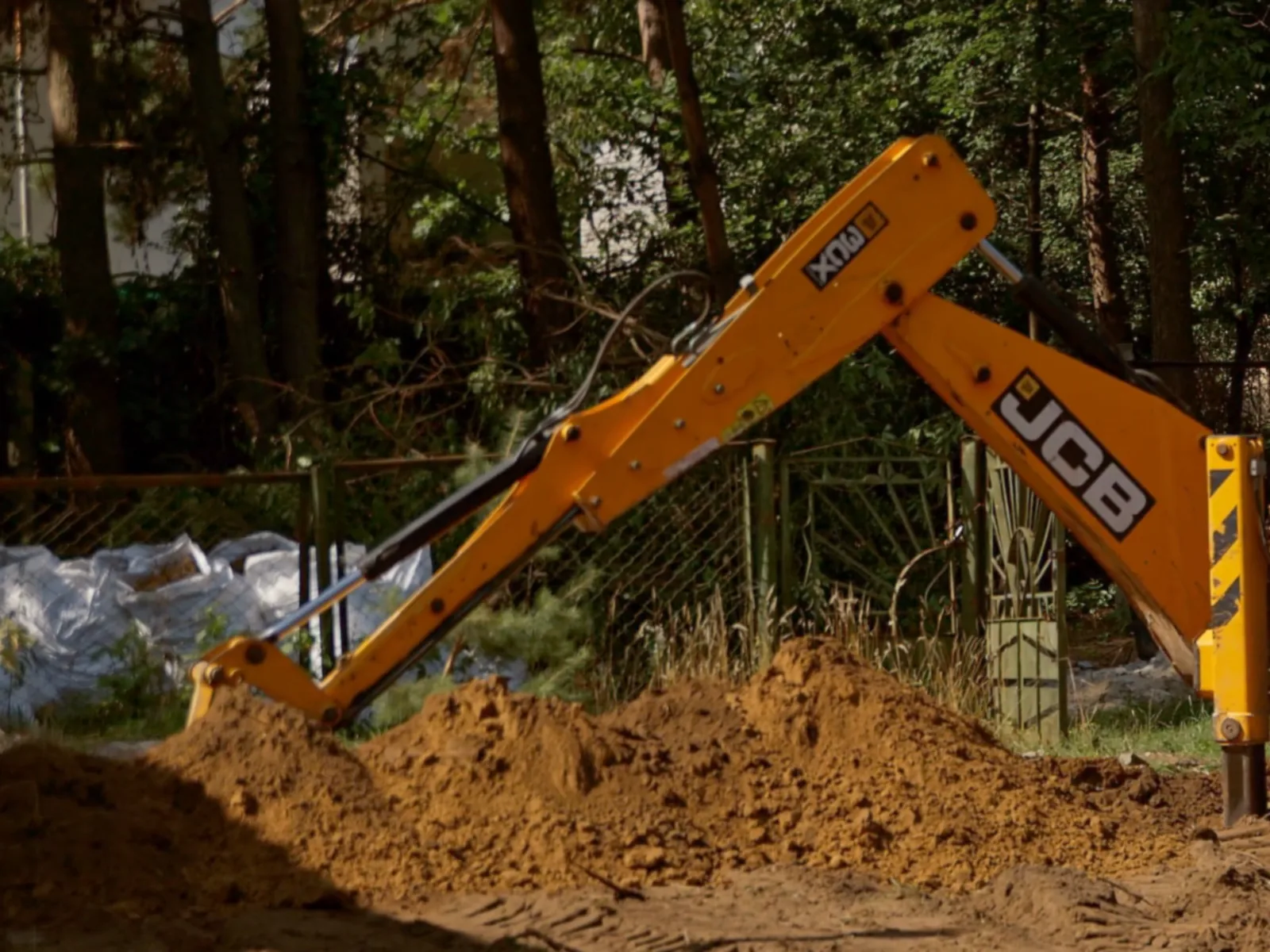
What's included
- Building pads for homes, shops, barns and commercial structures
- Stump and root-mass removal ahead of any slab work
- Cut and fill to grade, with compaction in lifts
- Positive drainage away from structures — the point of finish grading
- Coordination with the erosion and sediment control plan on permitted sites
Why grading is drainage, not flatness
A building pad is not a flat spot; it is a shaped surface with intent. The pad itself is built up and compacted so it will carry load without settling, and the ground around it is sloped so that surface water moves away from the structure instead of pooling at its edge. Get the first part right and the second part wrong and you have a sound slab sitting in a basin.
South Georgia soils make this specific. Tifton-series soils are classed as well drained and the Valdosta series as somewhat excessively drained with rapid permeability, so water tends to move downward quickly rather than running off. That sounds like an advantage and often is — but it also means the surface gives less warning before it becomes soft under load, and that fill placed without proper compaction can consolidate unevenly later. Compacting in lifts rather than in one deep push is what prevents that, and it is a step that is invisible once the slab is poured.
Cut, fill and the material question
Most pads are some combination of cutting high ground down and filling low ground up. Balancing those two on site, so that material moves within the parcel rather than being trucked in or out, is usually the cheapest outcome and it is worth asking whether a design can be adjusted slightly to achieve it. Where fill has to be imported, the question is what it is: sandy material compacts and drains differently from clayey material, and organic material — including anything with mulch, roots or stumps in it — should not be under a structure at all.
Root mass is the failure mode that shows up years later rather than immediately. Wood buried under a pad decays, loses volume and leaves a void that the ground above eventually finds. That is why forestry mulching, which deliberately leaves roots in place, is not a substitute for grubbing when a structure is going on the ground. If a pad is being built where trees stood, the written scope should say explicitly that stumps and root balls are being removed rather than buried.
Where site prep meets the permit
Grading is named directly in Georgia's definition of land-disturbing activity, so a grading job of any size sits inside the same framework as clearing. Once total disturbance on the project reaches 1.0 acre, a land disturbance permit, NPDES construction general permit coverage and an approved erosion, sedimentation and pollution control plan are required before work begins, and Lowndes County administers its own soil erosion and sedimentation control ordinance alongside the state requirement.
In practice the erosion control plan and the grading plan are the same conversation: where water will go once the surface is reshaped, and what holds soil in place until vegetation re-establishes. On ground this permeable, sitting above an aquifer that the U.S. Geological Survey documents being recharged directly through caverns and sinkholes north of Valdosta, sediment control is not paperwork for its own sake. The permits and rules page sets out what applies and when.